What is a nikkah? A guide for couples in Scotland
, 6 minute read, by the Blanc Events team
The nikkah is the Islamic marriage ceremony, and for many couples it is the most meaningful part of the wedding. It is often short and simple, but there are a few things every couple should understand before the day.
What a nikkah is
A nikkah is the marriage contract in Islam. Two people agree, freely and in front of witnesses, to marry each other. The word itself means marriage or union. Once the contract is made and accepted, the couple are married in the eyes of their faith.
Unlike a long wedding day, the ceremony itself can take as little as twenty minutes. What surrounds it varies widely between families: some hold an intimate nikkah at home or at the mosque, others build a full event with a stage, guests and a meal.
Who needs to be there
Practices differ between schools of thought and communities, so always check with your imam. Most nikkahs include:
- The bride and groom, both consenting freely
- The bride's wali (guardian), usually her father or a close male relative
- Two adult witnesses
- An imam or officiant who leads the ceremony and the khutbah (sermon)
What happens during the ceremony
The officiant usually begins with a short khutbah and recitation from the Quran. The proposal and acceptance follow, often repeated three times, and the couple confirm their consent. The mahr is agreed, the marriage contract (nikkah nama) is signed by the couple and witnesses, and the officiant closes with a dua for the couple.
Afterwards, families often share dates, mithai or a full meal with guests.
The mahr
The mahr is a gift from the groom to the bride, agreed before or during the nikkah. It belongs to the bride. It can be money, jewellery or anything of value the couple agree on, and it can be given immediately or deferred.
Is a nikkah a legal marriage in Scotland?
Not automatically. In Scotland, a religious ceremony is legally recognised only when it is conducted by a celebrant authorised to solemnise marriages and the couple has obtained a Marriage Schedule from the registrar beforehand. Many couples hold their nikkah alongside a separate civil ceremony at a registry office. Check the current requirements with National Records of Scotland or your local registrar well before the date.
Setting up for a nikkah
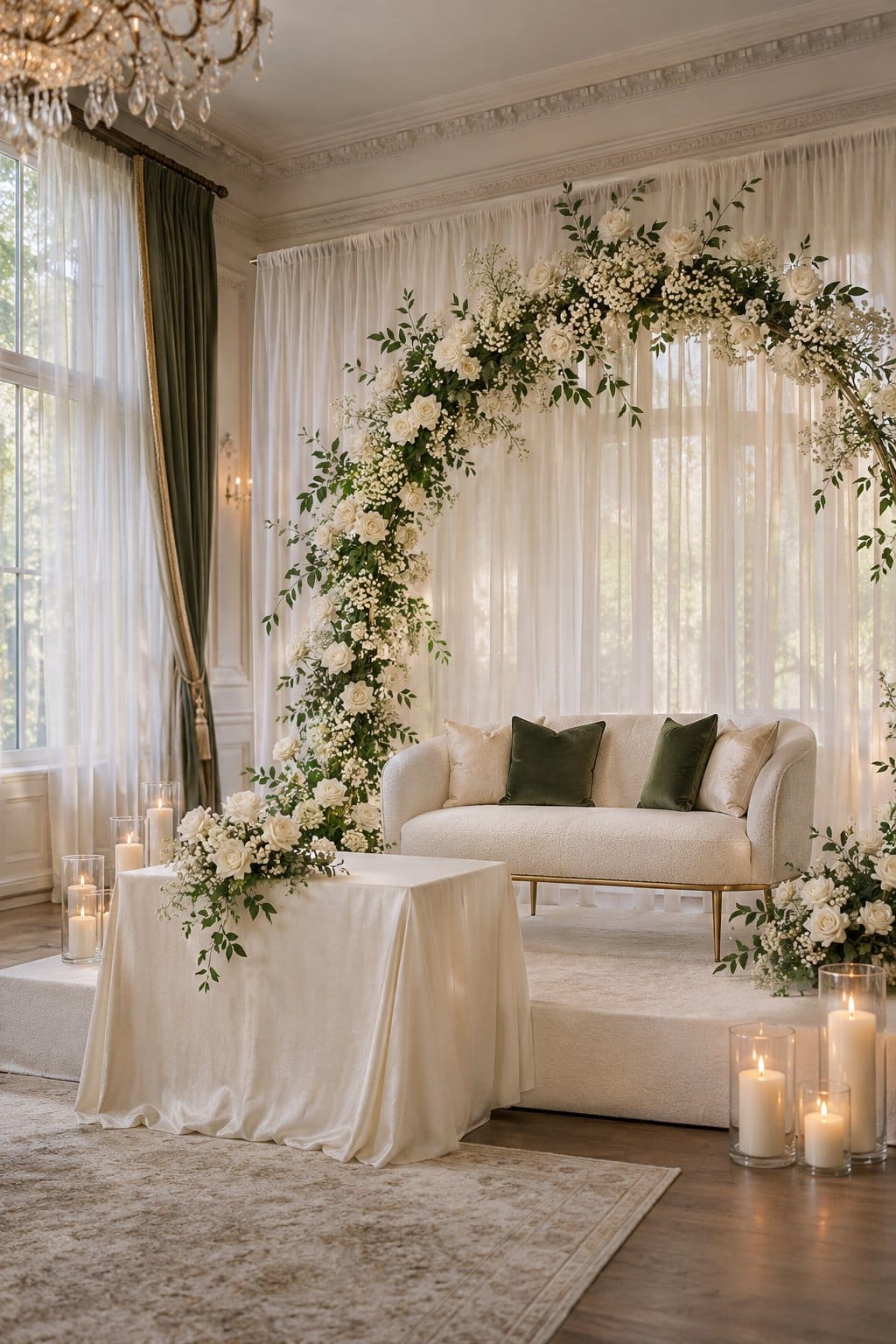
A nikkah setup usually includes a stage or seating for the couple, a signing table, and sometimes a pardah partition between seating areas. At home it can be as simple as a floral arch and a dressed table; at a venue it can be a full stage. If the nikkah is at a mosque, the committee will have rules on décor and food, so ask early.
If you are planning the walima for the same day, it helps to plan both together so the changeover runs smoothly.