What is a walima? Meaning, timing and how to host one
, 5 minute read, by the Blanc Events team
The walima is the wedding feast that follows the nikkah. It is a celebration, a thank you, and for many families the biggest gathering of the wedding.
The meaning of walima
Walima comes from an Arabic word meaning a gathering or feast. In Islamic tradition it is the meal held to announce and celebrate a marriage, and it is considered a sunnah: the Prophet Muhammad (peace be upon him) held a walima and encouraged others to do so, even if only modestly.
Who hosts the walima
Traditionally the groom and his family host the walima, while the bride's family hosts the earlier functions such as the mehndi and baraat in South Asian weddings. In practice many families now share the planning and cost.
When it is held
The walima usually takes place after the nikkah and the rukhsati (the bride's departure from her family home), often the day after or within a few days. Increasingly, couples hold the nikkah and walima on the same day to keep the wedding to a single weekend.
Planning the menu
Walima menus tend to be generous. Popular choices include:
- Grilled starters such as lamb chops and chicken tikka
- A biryani or pulao alongside a karahi or nihari
- Daal, vegetables, naan and rice
- Desserts such as ras malai, gajar halwa or gulab jamun
Plated or buffet?
Plated service keeps the evening formal and guests seated, which suits a stage programme with speeches. A staffed buffet offers more choice and suits larger numbers. Whichever you choose, staffing makes the biggest difference to how calm the evening feels.
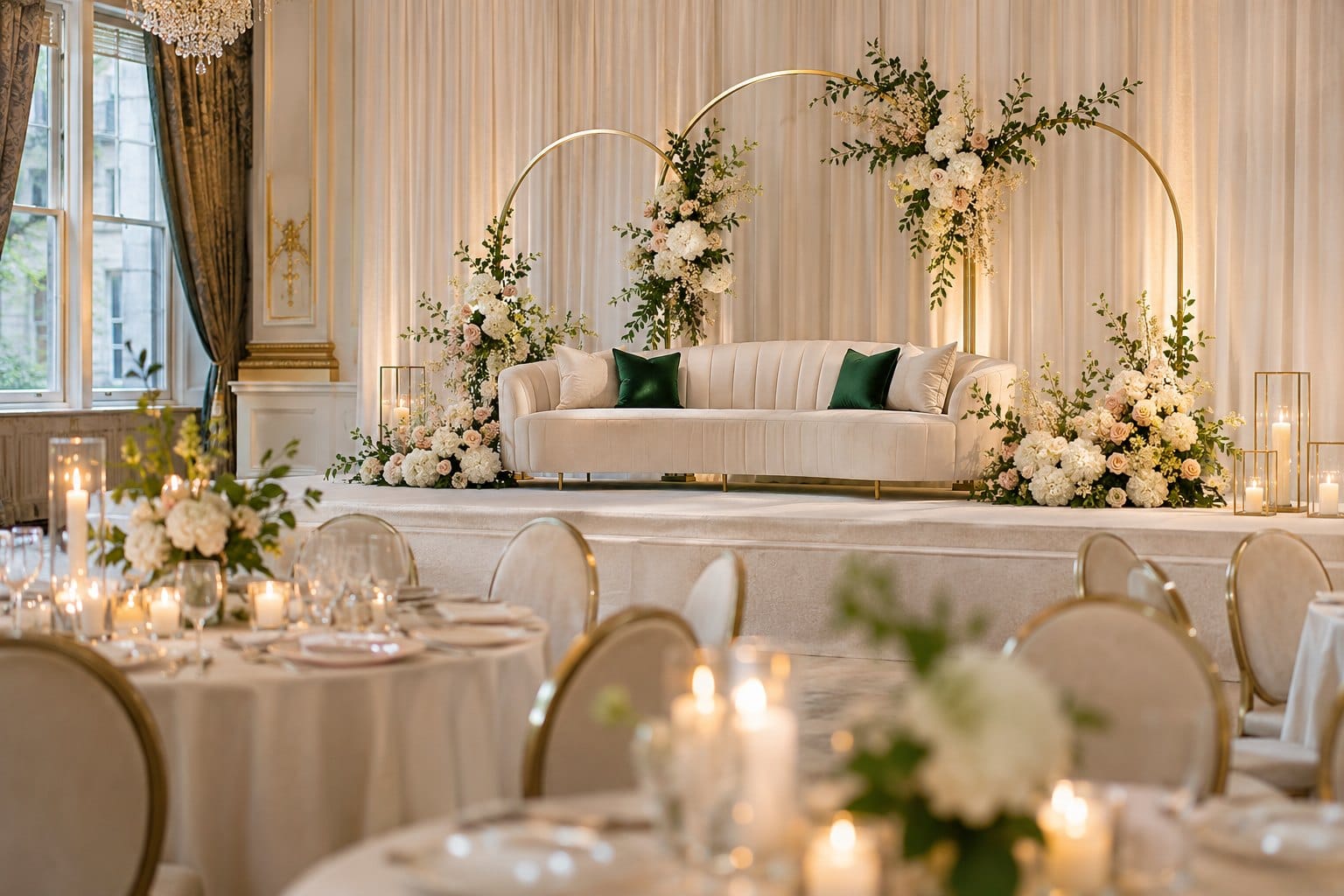
Décor and the couple's stage
The couple's stage is the focal point of most walimas. Plan the stage, guest tables and lighting together so colours carry through the room and photographs look consistent. If you are using the same venue as an earlier function, a change of florals or backdrop makes the walima feel distinct.